

You’re Asking Your Audience the Wrong Questions
How to Ask Better Poll Questions and Get Usable Answers

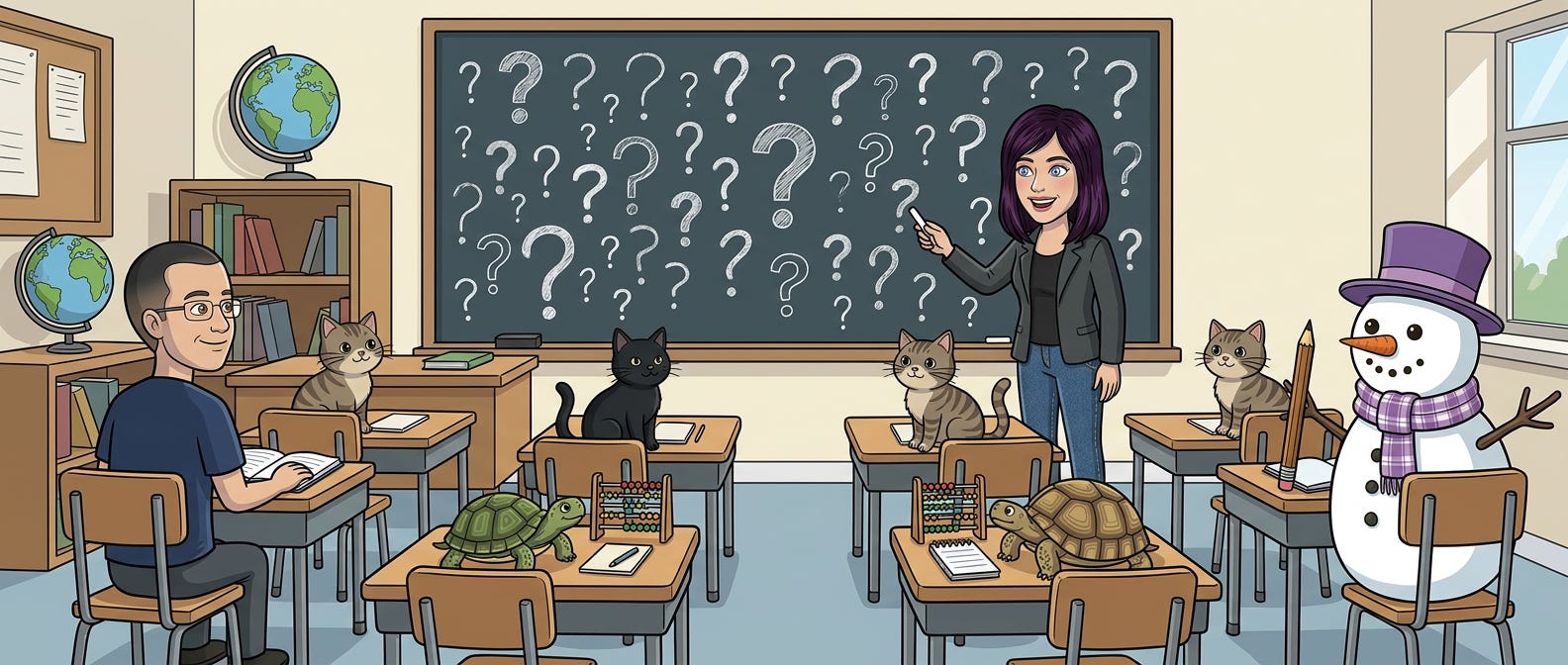
I spent 20 years designing surveys for companies that paid a lot of money to understand their customers. Most of my time was spent finding polite ways to say “that question sucks” and helping clients ask it the right way.
I don’t see many creators using polls to survey their audience. I’m not sure why. Maybe they don’t see the value? Maybe they’re afraid of what they’ll hear?
Look for everything, get nothing
The most common mistake I see among content creators and traditional businesses is asking vague questions. If someone could realistically answer “anything” or “nothing” to your questions, it is too vague.
A classic offender is the “What do you want to see more of?” question. It feels like a good question, but it isn’t.
Some respondents will answer “idk,” others will answer a long list of every possible option they can think of. You’ll end up with 45 different answers, half of which aren’t anything you are interested in writing about.
The only times this type of question is appropriate are when you are completely out of ideas and looking for 45 different answers to inspire you, or when you are trying to start a conversation.
Stop hedging and just ask
If you are asking your audience for input, you most likely already have a few ideas in mind. Tell them! Let your audience choose between the ideas. But be specific.
An example from my own Substack could be, “Would you like to see more business or cat stuff?” That is still quite vague. A better way to ask that would be “Which is more interesting to you for future content: more audience research or stories of cat shenanigans?” Two choices, done. Your audience will know exactly what you are looking for and can help you decide.
Or, you can experiment and ask for responses. But, instead of “Do you want more like this?” at the end of a new essay, be specific. “Would you read more content about using audience research to improve your content?”
The Substack poll option only lets you offer a few possible answers. It isn’t a difficulty, it’s a big plus. It holds you to specific questions: Yes/No, This/That. Done. Easy to answer, easy to get usable results.
Don’t be afraid of missing something
The instinct behind vague questions is fear that the right answer isn’t one of your options and you’ll never know it. What if you offer A and B, and the real answer is C?
Add a comments prompt. “Neither of these? Tell me what you’d actually read.” That’s your safety net without blowing up your question by trying to account for every possibility.
Ask what they’ll do, not what they want
When writing your question, ask about what your audience will do, not what they want. Humans will naturally tell you what they think will make them look better. I want to read Dostoevsky, but I end up reading random Substack posts instead.
Changing the wording of the question won’t get everyone to give you a completely honest answer, but it will get you as close as you can without using a truth serum.
Make polling a habit
Once you have a small but active audience (even 50-ish engaged readers), make asking questions a normal thing. Your audience will get used to it and probably enjoy helping you direct your vision. And, it will lessen your anxiety about missing something; you’ll just get it next time.
Be sure to act on it. They took the time to answer. Don’t be a jerk who doesn’t listen. If your audience all wants more cowbell, give them more cowbell!